
Why I Chose to Pursue My Master’s Abroad — And How It Transformed My Career
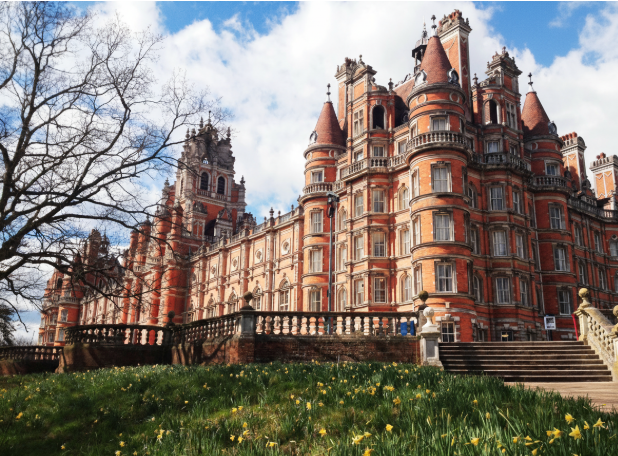
When I first started looking into master’s programs, I knew that the field I wanted to work in - communication and technology for international development - was incredibly niche. Among the many programs in international development more broadly, I found three that offered specifically what I wanted to study. At the time, I was traveling around rural Senegal on a Fulbright grant, spending my days conducting research with very limited internet access. Doing a lengthy, side-by-side comparison of programs wasn’t realistic, so I applied to all three options: Ohio University, the University of Colorado–Boulder, and Royal Holloway, University of London (RHUL).
Once the acceptances came in, I dug deeper. I compared financial packages, looked at logistics, and paid close attention to the structure of each program. RHUL stood out not only for its mix of coursework but also for the strong dissertation emphasis and the fact that it was a one-year program, allowing me to keep tuition and living costs lower and dive into my professional career sooner. But the real deciding factor was location. Having been an exchange student in France during high school and from a transformative undergraduate study abroad experience in Senegal, I was a committed champion of international education. I had even volunteered as a peer mentor in my university’s study abroad office, encouraging other students to take the leap. So when the chance came again, I knew I wanted the challenge and growth that come with studying in a different academic culture.
Settling Into a New Home
Compared to navigating daily life in Senegal, settling into England was undeniably easier, but it wasn’t without its own surprises. RHUL provided a helpful packet for international students outlining practical steps such as registering with local services, opening a bank account, and getting a SIM card. Still, what helped the most was connecting with an American student who had completed my program the year before and stayed on for her PhD.
She became an invaluable guide especially when I ran into issues. She told me exactly which bank accounts international students could actually get approved for, explained the dynamics between lecturers and post-grad students, and helped demystify the British grading scale (which initially felt shockingly harsh until I understood how it worked). She became both a mentor and a friend, and the broader international student community became a major source of connection and support.
Inside the Classroom: Fast-Paced but Immersive
The program itself was intensive. Instead of juggling multiple classes at once, we took consecutive modules, each lasting only two or three weeks and ending with a major paper or project. This structure meant fully immersing myself in one topic at a time, which I loved. It also meant the pace left less room for European travel compared to friends in other courses, but it also created a close-knit cohort and a rhythm of steady, meaningful learning.
Being just outside London added an extra layer of learning. Lecturers often drew on case studies from global development organizations based in the city, and there were plenty of opportunities to attend talks, events, and conferences relevant to my field. I also volunteered with several university groups and local organizations, which was another meaningful way of grounding myself in my new environment.
The Dissertation Experience
After the coursework wrapped up, we had three months dedicated solely to our dissertation research. This phase was highly independent: I shaped the research design, managed my own timeline, and checked in with my supervisor only occasionally.
Because my degree focused on international development, we were encouraged to travel abroad to collect data. Spending six weeks in Malawi researching an educational radio program for farmers was an incredibly rich learning experience. I traveled across the country to examine how audience input shaped programming and saw firsthand the program's impact on farmers' lives.
Submitting the dissertation itself was anticlimactic. I printed out my work, dropped it in a box in the Geography Department office, and that was that. Because most of us were international students whose visas expired shortly after the academic year ended, very few from my cohort stayed for graduation. It made the ending feel abrupt, but I used my remaining months to live in London and work at a nonprofit focused on leveraging technology for global health and governance programs, which helped bridge the transition from academic life to professional work.
Challenges and Lessons Learned
Even though England is an English-speaking country with a culture that is more familiar than many other places, adapting wasn’t automatic. The biggest challenge, hands down, was the weather. Coming from a year in Senegal, the constant clouds and damp air hit me hard. Balancing fast-paced coursework with the desire to explore also required intentionality.
But one of the biggest things I took away from the experience was a deeper comfort with being part of an international academic environment. My cohort was made up almost entirely of international students, and their perspectives broadened my thinking, challenged my assumptions, and prepared me well to work in organizations with colleagues from around the world.
Advice for Future Students
Go for it - you won’t regret the experience. Studying abroad isn’t always easy, but it’s incredibly worthwhile.
Find someone one step ahead of you. Connecting with an older international student will make your transition infinitely smoother.
Talk to real people when choosing a program. Program leads, professors, and current students can help you understand the nuances behind the website descriptions.
Build community early. Join campus groups, volunteer, and connect with other international students. This will help you feel at home much faster.
Be open to new ways of doing things. Academic norms, communication styles, and general expectations may differ from what you’re used to, and you may end up preferring some of them.
Final Takeaway
Choosing to pursue my master’s degree abroad was one of the best decisions I’ve made. It gave me an academically rigorous experience, lifelong friendships and mentors, and a broader understanding of how people work, think, and collaborate across cultures. More than anything, it laid a foundation for working across domains, with diverse colleagues, and on problems that require a truly global perspective.
Written by Caitlin L., Master of Science, Practicing Sustainable Development with a specialism in Information and Communication Technology for Development, Royal Holloway, University of London (England). Originally from Minnesota, USA. You can connect with Caitlin on LinkedIn.
Comments